What does 'vendor lock-in' mean?
Vendor lock-in refers to a situation where the cost of switching to a different vendor is so high that the customer is essentially stuck with the original vendor. Because of financial pressures, an insufficient workforce, or the need to avoid interruptions to business operations, the customer is "locked in" to what may be an inferior product or service.
Imagine an office has coffee brought in by a coffee vendor, and this vendor requires specific coffee machines in the office that only the vendor sells. Now imagine there is a steep decline in the quality of the coffee that this vendor delivers. Switching to a new coffee vendor would mean the old machines they purchased become useless, as the switch likely requires the purchase of new coffee-making equipment. Given the hassle and added expense of replacing every coffee machine, the workers in the office would be effectively locked into their agreement with their old vendor and forced to drink inferior coffee.
A real-world example of vendor lock-in is the way Apple locked consumers into using iTunes in the early days of the service, because music purchased via iTunes could only be played within the iTunes application or on an iPod.
What is vendor lock-in in cloud computing?
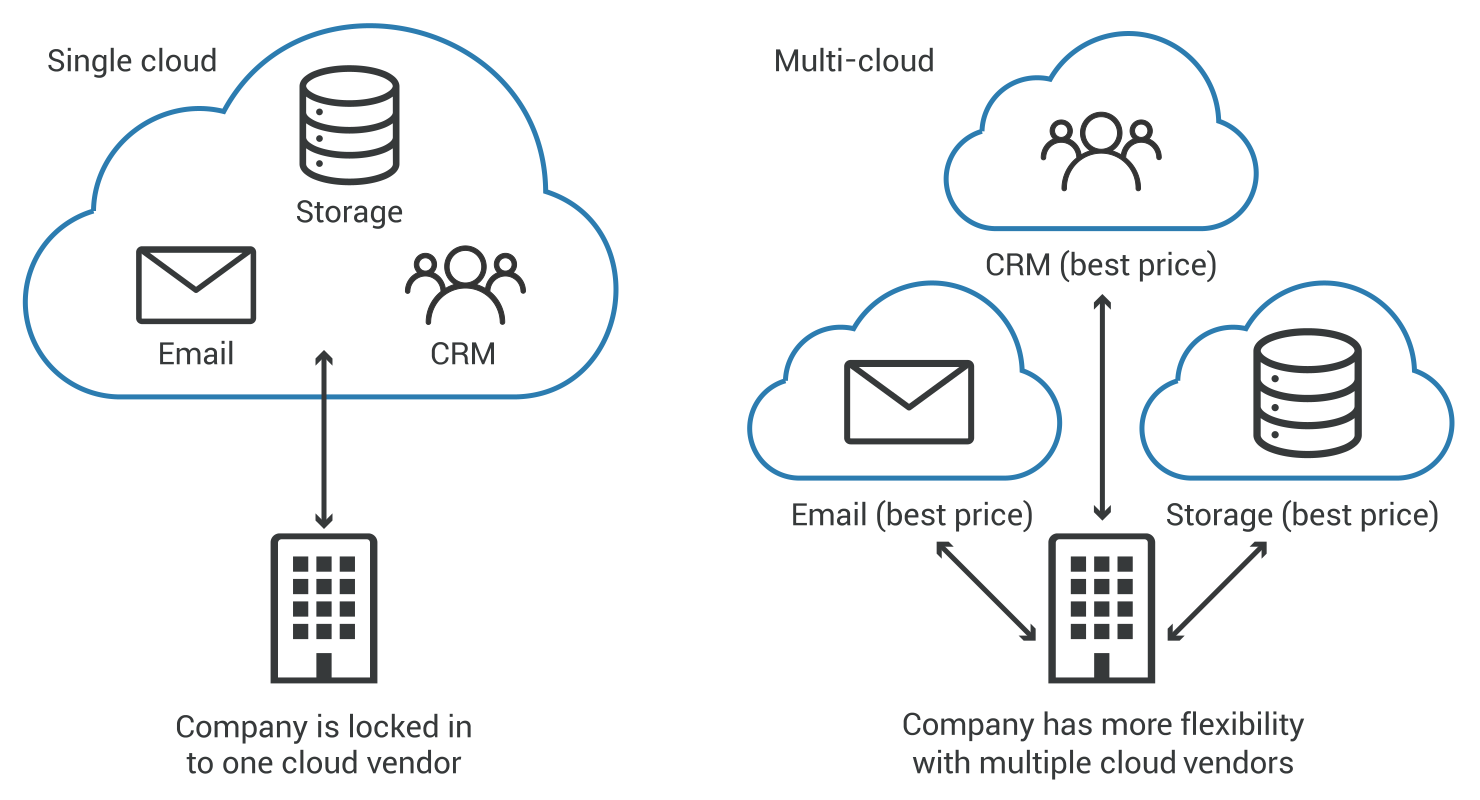
In cloud computing, some amount of software or computing infrastructure is outsourced to a cloud vendor, which offers it as a service and delivers it over the Internet. For instance, cloud-hosted servers are infrastructure-as-a-service (IaaS), and cloud-hosted applications are software-as-a-service (SaaS).
Sometimes, a company may find themselves locked into a certain cloud provider. Vendor lock-in can become an issue in cloud computing because it is very difficult to move databases once they are set up, especially in a cloud migration, which involves moving data to a totally different type of environment and may involve reformatting the data. Also, once a third party's software is incorporated into a business's processes, the business may become dependent upon that software.
Why is vendor lock-in a concern?
A number of circumstances can negatively impact a business if they are locked in with a certain cloud vendor:
If a vendor's quality of service declines, or never meets a desired threshold to begin with, the client will be stuck with it
The vendor may also drastically change their product offerings in such a way that they no longer meet a business's needs
A vendor may go out of business altogether
Finally, a vendor may impose massive price increases for the service, knowing that their clients are locked in
Overall, handing off foundational, business-critical technology to an external vendor is not easy for any company, and it requires a large degree of trust in the vendor.
How can companies avoid the risks of vendor lock-in?
Evaluate cloud services carefully: Companies should thoroughly research a cloud vendor before they make a commitment, ideally with a proof of concept deployment to make sure that their level of service is sufficient.
Ensure data can be moved easily: Companies using cloud computing should make an effort to keep their data portable, or easy to move from one environment to another. They can partially do this by clearly defining their data models and keeping data in formats that are usable across a variety of platforms, rather than formats that are specific to a given vendor.
Backups: Keeping internal backups of all data helps a business stay ready to host the data elsewhere if it is too difficult or time consuming to extract it from cloud service (as well as providing some protection from ransomware).
Multi-cloud or hybrid cloud strategy: A multi-cloud approach incorporates multiple cloud providers, reducing dependence on any single vendor. In a hybrid cloud, some data will remain within an organization's direct control, either in a private cloud or stored on-premise.
How does Cloudflare help mitigate vendor lock-in?
Operating in the cloud is a must for most modern businesses. Cloudflare helps prevent businesses from becoming too dependent on any one cloud provider.
Cloudflare is infrastructure-agnostic — the Cloudflare product stack can be deployed in front of any type of infrastructure, with any cloud provider or combination of providers (including multi-cloud and hybrid cloud deployments). With Cloudflare deployed, a company is not dependent upon cloud infrastructure providers for performance, reliability, and security services, and they can move easily between cloud providers while still offering fast, reliable service to customers.
FAQs
What is vendor lock-in?
Vendor lock-in is when a customer is essentially forced to continue using a specific vendor's product or service because the cost and effort of switching to a different one are prohibitively high. This can leave the customer stuck with what might be an inferior product or service.
What does vendor lock-in look like in cloud computing?
In cloud computing, vendor lock-in can occur because it is very difficult, time-consuming, and expensive to move databases and applications once they are set up in a particular cloud environment. A business might become so dependent on a cloud provider's specific software and infrastructure that switching to a new provider would require a major, costly, and disruptive migration.
Why is vendor lock-in a concern for businesses?
If a vendor's quality of service declines, they drastically change their product offerings, or they impose massive price increases, a locked-in customer has little choice but to accept it. In the worst-case scenario, the vendor could go out of business altogether, leaving the customer unable to continue business operations.
How can companies avoid vendor lock-in?
To avoid or mitigate the risks of vendor lock-in, companies should carefully evaluate their cloud providers, ensure data remains portable, use a multi-cloud or hybrid cloud environment (to avoid being overly dependent on one cloud), and maintain internal backups of all data.
How does Cloudflare help prevent vendor lock-in?
Cloudflare's services are infrastructure-agnostic, meaning they can be deployed in front of any type of infrastructure, with any cloud provider. This allows a company to easily move between cloud providers while maintaining their performance, reliability, and security.